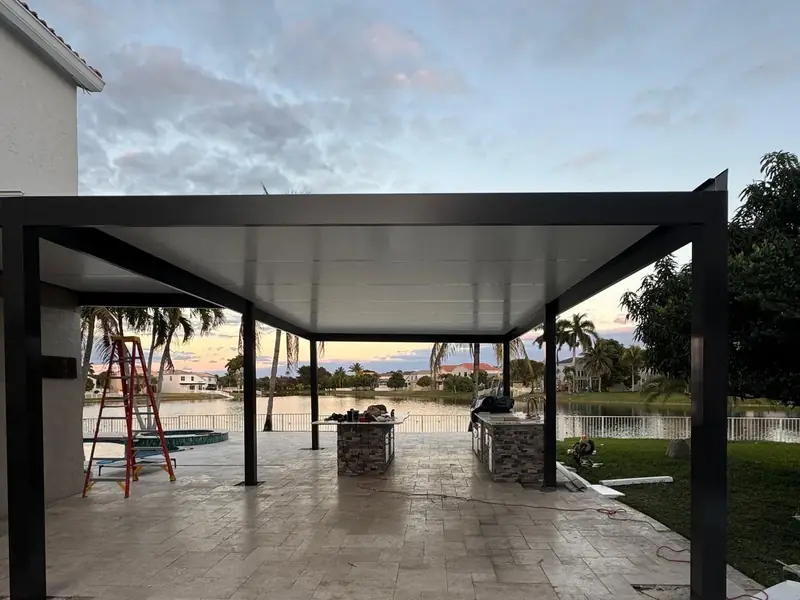
Pergola Lights, Fans, and Outlets: How to Plan the Electrical
Electrical choices are the one part of a pergola that is hard to change later. Decide them before the roof goes on.
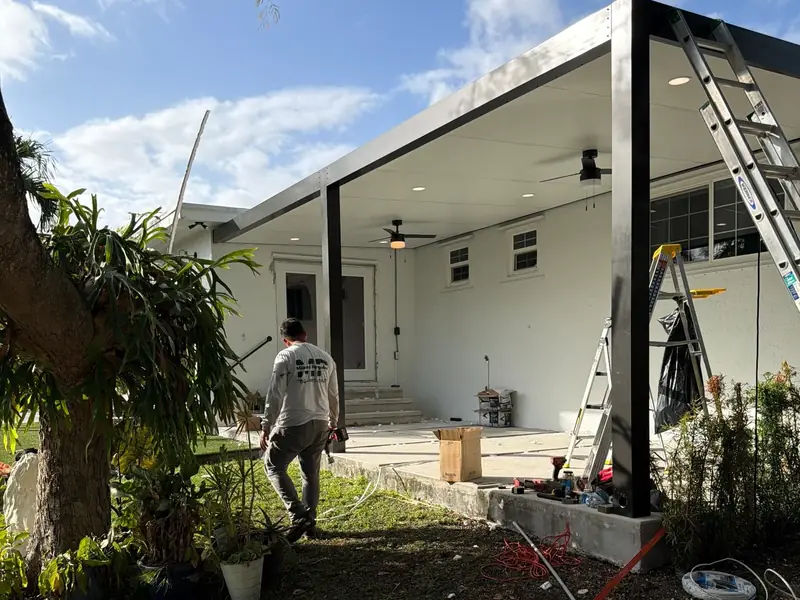
Decide every light, fan, outlet, and switch before installation, because the wiring runs inside the insulated roof. Use fans rated for damp or wet locations, keep blades at least 7 feet above the floor, and put outdoor outlets on GFCI protection with weatherproof covers. Electrical work is reviewed with the permit.
A pergola with a solid roof can be wired like a room: lights in the ceiling, a fan overhead, outlets where you need them. The catch is timing. The wires run inside the insulated roof, so the plan has to be finished before the panels go up.
Recessed lights
Recessed LED lights sit flush in the ceiling and give even light without glare.
- Layout. A common starting point is a light every 4 to 6 feet, in rows that line up with the fan and the furniture below.
- Color. Warm white feels better on a patio at night than the bluish light of a garage.
- Dimming. Put the lights on a dimmer. Full brightness for cooking and cleanup, low for dinner.
- Zones. On a large cover, split the lights into two switches so you can light the dining end without lighting the lounge end.
Ceiling fans
In Miami a fan matters as much as the roof. Moving air makes a shaded patio comfortable and keeps mosquitoes from settling.
- Rating. Outdoor fans are rated for damp locations or wet locations. A damp-rated fan is made for covered spaces that do not get direct water. A wet-rated fan can take rain. Under an open-sided roof in South Florida, where storms blow rain sideways, wet-rated is the safer choice near the edges.
- Height. Blades should sit at least 7 feet above the floor.
- Number. Plan one fan for each seating or dining zone. A long cover usually needs two.
- Placement. Center each fan over where people sit, not over the middle of the roof. Keep fans away from the grill.
Outlets
Think about what will plug in: a TV, a speaker, a blender, a phone charger, holiday lights, a small refrigerator.
- Outdoor outlets need GFCI protection, which cuts the power if it senses a fault.
- Outlets exposed to weather need a weatherproof cover that closes over a plug that is in use.
- For a wall-mounted TV, put an outlet high on the wall behind it so no cord shows.
- An outdoor kitchen may need its own circuits. See our outdoor kitchen pergola guide.
A solid panel privacy wall is a good place for an outlet and a switch when the pergola stands away from the house.
Switches
Put the switches by the door you will use most. Lights and fans should be on separate switches. If the fan has a remote, still give it a wall switch so it can be shut off without hunting for the remote.
Want a price for your own patio?
We build pergolas, patio covers, and screen enclosures across Miami-Dade County. Estimates are free and there is no obligation.
Why you have to decide early
The ceiling of an insulated pergola has no attic above it. Wires run through the roof panels to each fixture before the roof is closed and sealed. Adding a fan or light afterward usually means surface-mounted conduit, which works but never looks as clean. See how an insulated pergola is built.
Changing the plan after the permit drawings are submitted can also mean a revision.
Permits and inspection
Electrical work on a patio cover is part of the permit. The City of Homestead's checklist for aluminum covers, for example, asks for the outlets and light fixtures to be shown on the construction documents, and the plans go through electrical review. The wiring has to be installed to code by a licensed electrician and inspected. More in our permit guide.
A simple planning checklist
- Mark where the table and seating will go
- Place a fan over each zone
- Lay out recessed lights in rows around the fans
- List everything that needs an outlet and where it will sit
- Choose the switch location and how many switches
- Decide on a dimmer
Bring the list to your estimate and we will draw it into the layout.
From our project notes: Pergola with Recessed Lights and Fans for a Covered Patio in Miami-Dade
Frequently asked questions
Can I add a ceiling fan to my pergola later?
It is possible, but harder. The wiring runs inside the roof, so a fan added later usually needs surface conduit. Even if you are unsure, having the wiring roughed in during the build is the better plan.
Do I need a wet-rated fan under a pergola?
A damp-rated fan is designed for covered areas that stay dry. Because wind-driven rain reaches under open-sided roofs in South Florida, a wet-rated fan is the safer choice, especially near the edge.
How many recessed lights does a pergola need?
It depends on the size and how bright you want it. A light every 4 to 6 feet in rows is a common starting point, with a dimmer to bring the level down.
Does the electrical work need a permit?
Yes. Electrical work is reviewed with the pergola permit and inspected.
Miami Pergolas LLC builds pergolas, insulated patio covers, and screen enclosures across Miami-Dade County, including Kendall, Doral, Hialeah, Homestead, Pinecrest, Palmetto Bay, Cutler Bay, Miami Lakes, and nearby communities. Call (786) 201-0604 for a free estimate.