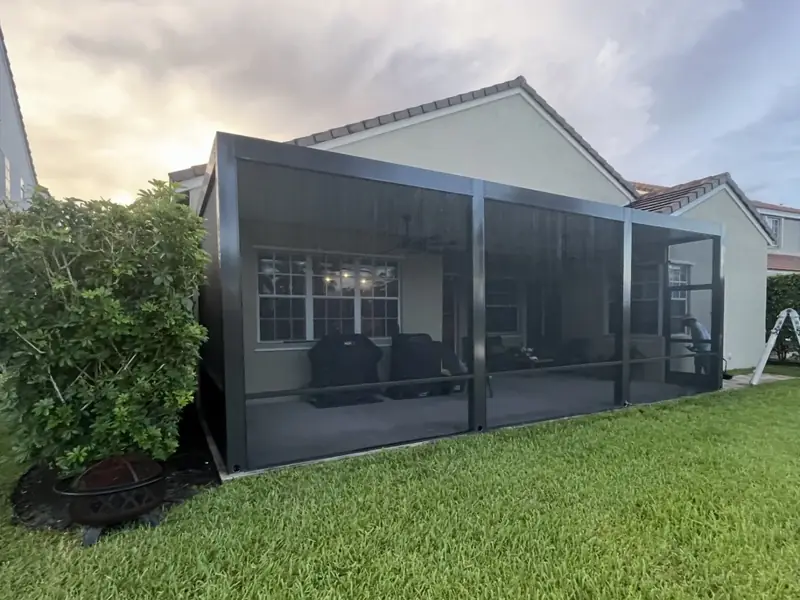
Can an Aluminum Pergola Survive a Hurricane in Miami?
An honest answer about wind ratings, engineering, and what a permit does and does not guarantee.
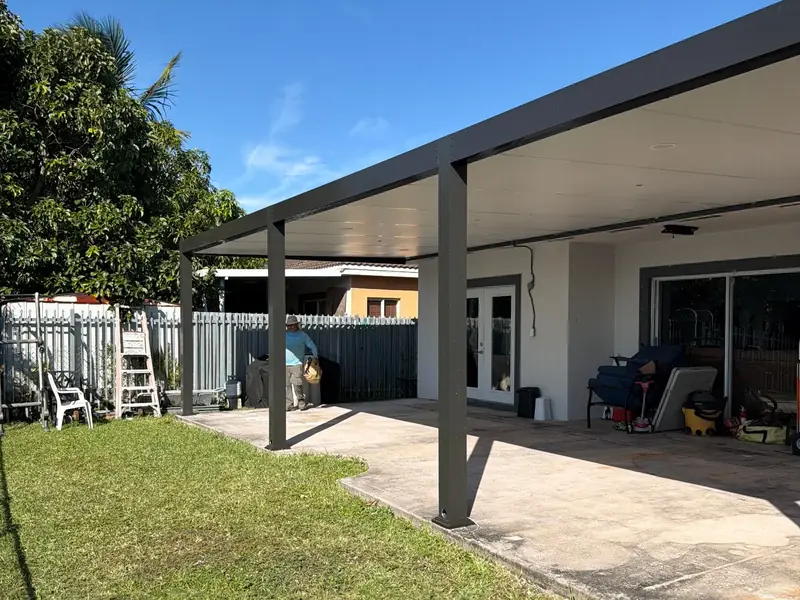
Nothing is hurricane-proof. A pergola that is engineered, permitted, and inspected in Miami-Dade is designed for the county's 175 mph design wind speed under the Florida Building Code, with anchors and connections sized to resist uplift. That gives it a strong chance in a storm. It cannot protect against flying debris, falling trees, or flooding.
Every pergola company in South Florida uses the word "hurricane" somewhere in its advertising. Here is what stands behind the word, and where its limits are.
Start with the plain truth
No outdoor structure is hurricane-proof. A strong enough storm, a large enough piece of debris, or a falling tree can damage anything. What you can ask for is a structure that was designed, built, and inspected to the standard the building code sets for this county. That standard is among the strictest in the country.
The High-Velocity Hurricane Zone
After Hurricane Andrew tore through South Dade in 1992, Florida rewrote its building rules. Miami-Dade and Broward counties became the High-Velocity Hurricane Zone, with requirements beyond the rest of the state.
For homes and structures like patio covers in Miami-Dade, the Florida Building Code sets a design wind speed of 175 mph. Engineers use that number, along with the exposure of the site, to calculate the forces the structure has to resist.
Two points are often misunderstood:
- Design wind speed is not a hurricane category. It is a peak gust figure used in engineering. Hurricane categories are based on sustained wind. The two scales are not interchangeable.
- Exposure matters. A house beside open water or open land is hit harder than one sheltered by other buildings. Engineers account for that with an exposure category.
What the engineering covers
In a storm, a flat roof behaves like a wing. Wind passing over and under it tries to lift it. So the engineering for a pergola is mostly about holding it down and holding it together:
- Anchors and footers that keep the posts in the ground
- Post and beam connections that keep the frame intact
- Fastening of every roof panel to the frame
- The connection to the house on an attached cover
- Walls, which add wind load when they are part of the design
The engineer produces drawings showing each of these. The building department reviews them, and inspectors check the work on site.
Why the permit matters here
The permit is the mechanism that makes all of that happen. Without it, nobody outside the installer has checked the anchor sizes or looked at the connections. With it, the design has been reviewed and the installation inspected.
When we build with a permit, the structure follows the engineered drawings your building department approved. See our Miami-Dade pergola permit guide.
Want a price for your own patio?
We build pergolas, patio covers, and screen enclosures across Miami-Dade County. Estimates are free and there is no obligation.
What engineering cannot protect against
- Flying debris. Roof tiles, fence panels, and patio furniture become projectiles.
- Falling trees and limbs. Trim anything that overhangs the cover.
- Storm surge and flooding. Wind engineering does nothing about water.
- Things added later. Tarps, shade sails, and curtains tied to the frame catch wind the structure was not designed for.
- Neglect. Loose fasteners and failed sealant make any structure weaker.
Why online kits are a different product
A kit sold online for a few thousand dollars is designed for a mild climate and an afternoon of assembly. It does not come with engineering for a 175 mph design wind speed, and it cannot be permitted here as it is. A pergola built for Miami-Dade uses heavier sections, engineered connections, and real foundations. That difference accounts for much of the gap in price.
What you can do
- Build with engineering and a permit.
- Keep it maintained. See our maintenance guide.
- Clear the patio before a storm. Our hurricane prep checklist covers what to do.
- Check your insurance. Many Florida policies treat patio structures differently from the house. See is a pergola covered by homeowners insurance.
- Protect the openings behind it. A patio cover does not shield the sliding doors and windows under it from flying debris. Our sister company compares the options in its guide to hurricane shutters in Miami.
Frequently asked questions
What wind speed can an aluminum pergola withstand?
A permitted pergola in Miami-Dade is engineered for the county's 175 mph design wind speed under the Florida Building Code. Ask to see the engineered drawings for your structure.
Should I take my pergola down before a hurricane?
No. A permanent pergola is designed to stay in place. Remove everything loose from under and around it.
Is aluminum strong enough for hurricanes?
Strength comes from the design: the size of the posts and beams, the connections, and the anchors. Aluminum structures engineered for the High-Velocity Hurricane Zone are permitted throughout Miami-Dade.
Will my screens survive a hurricane?
Screen panels are the most likely part to be damaged in a storm, and they are also the easiest part to replace.
Sources and further reading
Miami Pergolas LLC builds pergolas, insulated patio covers, and screen enclosures across Miami-Dade County, including Kendall, Doral, Hialeah, Homestead, Pinecrest, Palmetto Bay, Cutler Bay, Miami Lakes, and nearby communities. Call (786) 201-0604 for a free estimate.