Pergolas in Miami Beach and Key Biscayne: What Changes Near the Coast
The same pergola faces a tougher life on a barrier island. Here is what to plan for.
Near the coast, plan for higher wind exposure in the engineering, salt air on the finish and hardware, flood zones, and often an extra layer of city review. Aluminum is the right material because it does not rust, and a monthly freshwater rinse keeps salt from dulling it. Each island city issues its own permits.
From Sunny Isles Beach down through Surfside, Miami Beach, and Key Biscayne, and along the bayfront in Coconut Grove, Coral Gables, and Palmetto Bay, homes share three things: salt in the air, wind off open water, and a flood map that matters. A pergola here should be planned around all three.
Wind exposure
Every structure in Miami-Dade is engineered for the High-Velocity Hurricane Zone. Near open water there is a further factor. Engineers assign each site an exposure category based on what surrounds it, and a property facing the ocean or the bay with nothing to break the wind is in a more demanding category than one a few miles inland.
The result can be larger posts, deeper footers, or closer post spacing for the same size of cover. It is settled in the engineered drawings. See can an aluminum pergola survive a hurricane.
Salt air
Salt is hard on anything left outdoors. Wood rots faster and steel rusts. Aluminum does not rust, which is why it is the standard material for outdoor structures on the coast.
It still needs care:
- Rinse it. A freshwater rinse about once a month keeps salt from building up and dulling or pitting the finish.
- Ask about the hardware. Screws, bolts, and anchors face the same salt. Ask what fasteners are specified for your project.
- Watch the fans and fixtures. Choose outdoor fans and lights rated for wet locations, and expect them to wear faster than the structure does.
Our maintenance guide has a simple schedule.
Flood zones
Most of the barrier islands and much of the bayfront are in mapped flood hazard areas. Two practical effects:
- Florida's 2026 exemption for small residential projects under $7,500 does not apply in flood hazard areas. See the $7,500 permit exemption.
- Electrical outlets and equipment may need to be placed with flood elevation in mind. The electrician and the plan reviewer settle this.
Want a price for your own patio?
We build pergolas, patio covers, and screen enclosures across Miami-Dade County. Estimates are free and there is no obligation.
Permits: each island is its own city
Miami Beach, Key Biscayne, Surfside, Bal Harbour, Bay Harbor Islands, Sunny Isles Beach, North Bay Village, and Golden Beach are separate municipalities. Each issues its own permits and has its own zoning.
The City of Miami Beach, for example, asks for signed and sealed drawings and a signed and sealed survey with its residential permit applications, and its checklists warn that some projects need planning approval before the building permit is submitted. Historic districts add another review.
The practical advice is the same everywhere: confirm the steps with the city before you design, and allow extra time. See who issues your pergola permit.
Design ideas for coastal lots
- Keep the view. Use fewer, larger posts and place them at the corners.
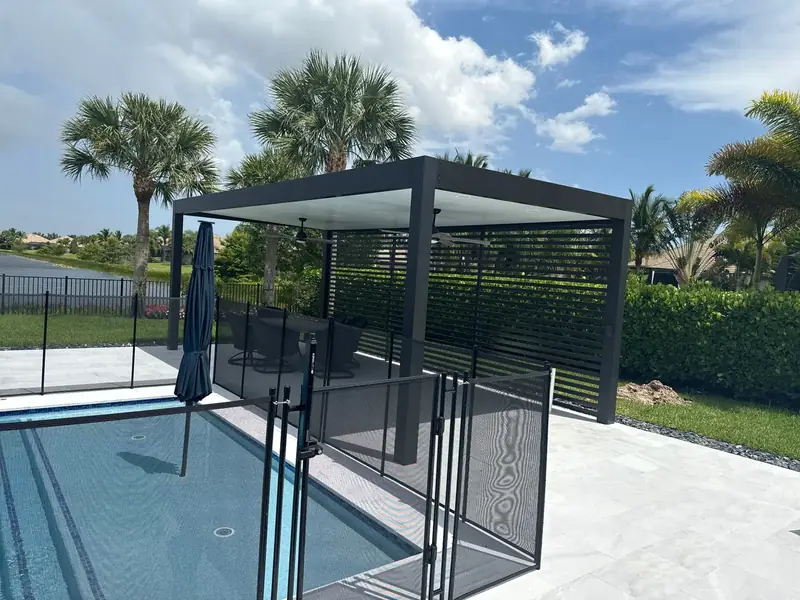
- Plan for the breeze. Leave the side facing the water open, and use a slat wall where you need privacy.
- Shade the pool deck. A freestanding pergola beside the pool is the most common coastal project. See poolside pergola ideas.
- Choose colors that hide salt. Lighter finishes show salt spray less than dark ones.
Insurance
Coastal properties often carry separate wind coverage with its own terms. Many Florida policies exclude aluminum-roofed patio structures and screen enclosures or cover them only by endorsement. Ask your agent before you build. See insurance for pergolas and screen enclosures.
Where we work
We build across Miami-Dade County, on the islands and along the bayfront, including Miami Shores, Palmetto Bay, and Cutler Bay.
Frequently asked questions
Does salt air damage aluminum pergolas?
Aluminum does not rust. Salt left on the finish for years can dull or pit it, so rinse the structure with fresh water about once a month near the ocean.
Are pergolas near the ocean engineered differently?
The design wind speed is the same across Miami-Dade, but sites facing open water are assigned a more demanding exposure category, which can mean heavier posts and footers.
Who issues pergola permits in Miami Beach?
The City of Miami Beach. Each barrier island municipality has its own building department.
What is the best pergola material near the beach?
Aluminum. It does not rust or rot, and it needs only regular rinsing to stay in good condition.
Sources and further reading
Miami Pergolas LLC builds pergolas, insulated patio covers, and screen enclosures across Miami-Dade County, including Miami Shores, Palmetto Bay, Cutler Bay, Pinecrest, Kendall, Doral, Hialeah, Homestead, and nearby communities. Call (786) 201-0604 for a free estimate.