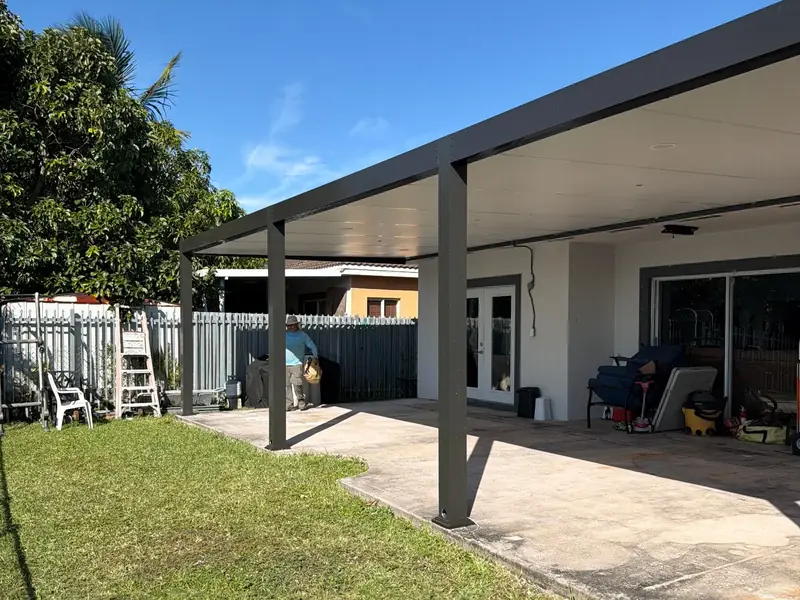
Pergola Setbacks in Miami-Dade: How Close Can You Build to the Property Line?
The setback numbers Miami-Dade County publishes for pergolas in single-family zoning, and what else limits where a pergola can go.
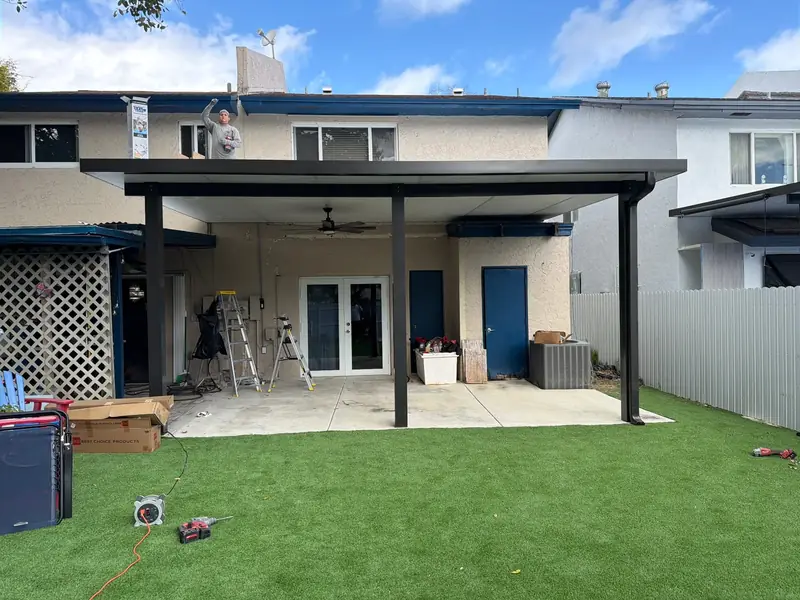
In unincorporated Miami-Dade's RU-1 single-family district, a pergola up to 100 square feet must sit at least 5 feet from the rear and interior side lot lines, or 2 feet with the neighbor's signed consent, and 55 feet from the front. Over 100 square feet, the accessory building setbacks apply: 75 feet front, 5 feet rear, and 5 to 7.5 feet on the side. Cities and other zoning districts set their own numbers.
A setback is the minimum distance between a structure and a property line. Get it wrong and the permit is rejected, or the pergola has to shrink after you have already planned the patio around it. Here are the numbers for the standard single-family zoning district in unincorporated Miami-Dade, and the other limits to check.
Setbacks for freestanding pergolas in RU-1
RU-1 is the county's standard single-family zoning district. It covers much of Kendall, Westchester, Tamiami, and other unincorporated neighborhoods. Miami-Dade County publishes these setbacks for sheds and pergolas in RU-1:
| Lot line | Pergola up to 100 sq ft | Pergola over 100 sq ft |
|---|---|---|
| Front | 55 ft minimum | 75 ft minimum |
| Rear | 5 ft minimum | 5 ft minimum |
| Interior side | 5 ft minimum | 10% of lot width, at least 5 ft and at most 7.5 ft |
| Side street (corner lots) | 10 ft minimum | 20 ft minimum |
The simpler rules for small pergolas apply only when the pergola is no larger than 100 square feet and no taller than 10 feet.
Why 100 square feet matters
A 10×10 pergola is exactly 100 square feet. A 10×12 is 120. That small difference moves the pergola from the small-structure rules to the accessory building rules, with a deeper front setback and a wider side-street setback on corner lots.
On most lots the front setback is not an issue, because pergolas go in the back yard. The side-street setback on a corner lot is the one that catches people.
The neighbor affidavit: from 5 feet to 2 feet
For a pergola of 100 square feet or less, the county allows the rear and interior side setbacks to drop from 5 feet to 2 feet if the owner of the abutting property consents in a signed affidavit. The county lists the form, the Affidavit to Allow Reduced Setbacks for Shed and Pergola, with its permit forms. It is submitted with the application.
On a tight lot, those 3 feet can be the difference between a pergola that fits and one that does not.
Attached pergolas are treated differently
The table above is for accessory structures, meaning pergolas that stand apart from the house. A cover attached to the house is reviewed as part of the house, and different setbacks can apply. Which rules govern your project is one of the first things we check on a site visit.
Want a price for your own patio?
We build pergolas, patio covers, and screen enclosures across Miami-Dade County. Estimates are free and there is no obligation.
Lot coverage
Zoning also caps how much of the lot can be covered by buildings. In RU-1 the county lists a maximum lot coverage of 40 percent. A large roofed pergola on a small lot with a big house can run into that limit before it runs into a setback.
Other things that limit where a pergola can go
- Easements. Utility and drainage easements run along the edges of many lots, and structures generally cannot be built in them. Your survey shows them.
- Septic systems. Posts and footers cannot sit on the tank or the drain field.
- Pools. The pergola has to work with the pool barrier and deck.
- HOA rules. An association can be stricter than the county. Under Florida law, county and city setbacks apply to a parcel in a homeowners association unless the association's governing documents set different ones.
Cities and other districts have their own numbers
Everything above is for RU-1 in unincorporated Miami-Dade. Townhouse and zero-lot-line districts are different, and every city writes its own zoning code. The City of Miami, Coral Gables, Hialeah, Doral, and the rest each have their own setbacks.
To find out what applies to you, look up your property on the Miami-Dade Property Appraiser's site to see whether you are in a city or the unincorporated area and which zoning district you are in. Our guide to who issues your pergola permit explains how.
What to do with this information
Before you settle on a size, mark the setbacks on a copy of your survey. If the pergola you want does not fit, the usual fixes are to resize it, attach it to the house, or, for a small one, ask the neighbor for the affidavit. Our pergola size guide and permit guide cover the next steps.
Frequently asked questions
How close to the property line can I build a pergola in Miami-Dade?
In the county's RU-1 district, 5 feet from the rear and interior side lines for a freestanding pergola, or 2 feet for a pergola of 100 square feet or less with the neighbor's signed consent. Other districts and cities differ.
Does a pergola count toward lot coverage?
A roofed structure generally does. In RU-1 the county's maximum lot coverage is 40 percent, so check the numbers on a small lot.
Can I build a pergola in an easement?
Generally no. Utility and drainage easements have to stay clear, and the survey submitted with the permit shows where they are.
Do setbacks apply to a pergola attached to my house?
Yes, but an attached cover is reviewed as part of the house and not as an accessory structure, so the numbers can differ from the table above.
Sources and further reading
Miami Pergolas LLC builds pergolas, insulated patio covers, and screen enclosures across Miami-Dade County, including Kendall, Doral, Hialeah, Homestead, Pinecrest, Palmetto Bay, Cutler Bay, Miami Lakes, and nearby communities. Call (786) 201-0604 for a free estimate.