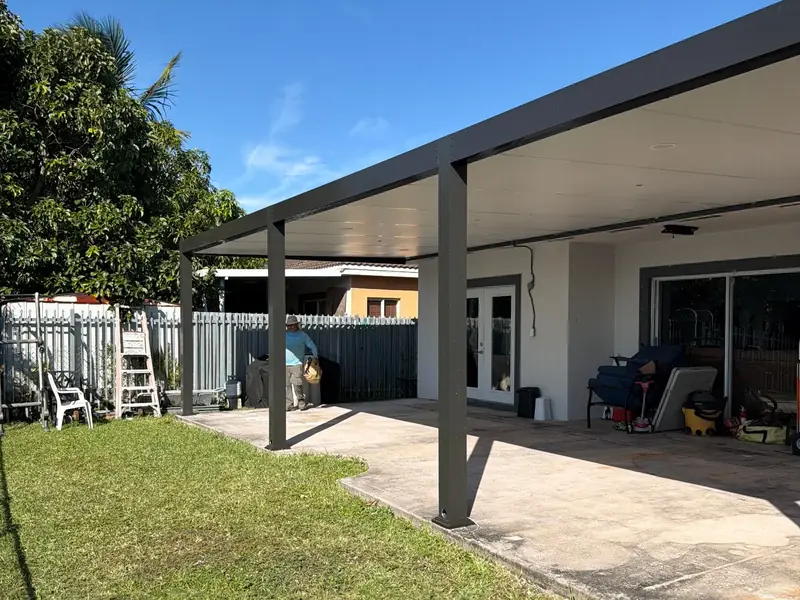
Getting HOA Approval for a Pergola in Miami-Dade
The steps, the paperwork, and the Florida rules that apply when your community has an architectural review committee.
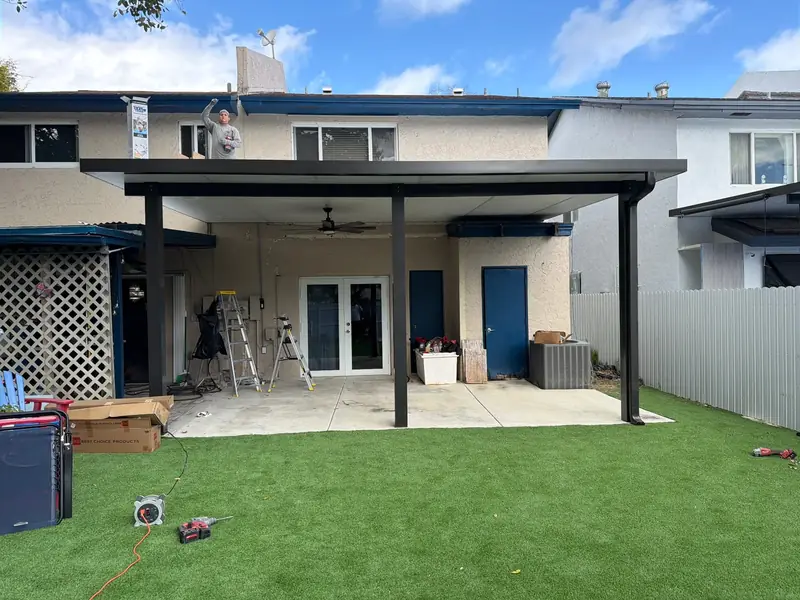
Submit an architectural review application before you apply for the permit. Include a survey with the pergola drawn on it, dimensioned drawings, colors and materials, and the contractor's license and insurance. Florida law limits an association's review to what its governing documents authorize, and a denial has to state the specific rule it is based on.
If you live in Doral, Miami Lakes, West Kendall, Homestead's newer subdivisions, or almost any townhome community in Miami-Dade, you probably have a homeowners association. Its approval is separate from the building permit, and it usually has to come first.
This is general information, not legal advice. Your association's own documents control.
Why the association comes first
Two reasons. Building without approval can lead to fines and an order to remove the structure. And several building departments want proof of approval with the permit application:
- The Town of Miami Lakes includes a homeowners association affidavit with its building permit application.
- The City of Homestead's checklist for aluminum covers and covered terraces asks for an association letter of approval where one applies, and it names communities such as Keys Gate as examples.
Step by step
- Read the documents. Find the declaration of covenants and any architectural guidelines. Look for rules on structures, colors, roof types, and placement.
- Call the management company. Ask for the architectural review application, the submission deadline, and the date of the next committee meeting. Many committees meet once a month.
- Put the package together. See the list below.
- Submit before the permit. Keep a copy and a record of the date.
- Get the decision in writing. You will need the approval letter for the city or county.
What to include in the application
- A copy of your property survey with the pergola drawn to scale
- Drawings with the width, projection, height, and post locations
- An elevation or photo-based rendering showing how it will look on the house
- Colors and materials for the frame, roof, and ceiling
- Photos of the existing patio and the back of the house
- The contractor's license and certificate of insurance
- A short description of drainage, lighting, and any screen or privacy walls
We prepare the drawings and specifications for our customers' applications.
Want a price for your own patio?
We build pergolas, patio covers, and screen enclosures across Miami-Dade County. Estimates are free and there is no obligation.
What Florida law says
Section 720.3035 of the Florida Statutes governs architectural review in homeowners associations. Three points help owners:
- An association or its committee can review plans only to the extent that authority is stated or reasonably inferred in the declaration or in published guidelines.
- When a request is denied, the association has to give written notice that states the specific rule or covenant behind the denial.
- County or city setbacks apply to your parcel unless the association's documents set different ones.
Condominiums follow a different statute, and a condo patio is often a common element controlled by the association. If you live in a condo or a townhome organized as one, ask the association what is allowed before you plan anything.
Hurricane protection is treated differently from a pergola. Since 2024, an association may not deny shutters or impact windows that meet its own specifications. Our sister company covers that in HOA rules for hurricane shutters.
What makes approval easier
- Match the house. Pick a frame color that ties into the trim, windows, or roof.
- Choose a style that fits the community. A slim modern frame on a modern townhome, a classic profile on a Mediterranean home.
- Show the drainage. Committees like to see that water runs to your own yard and not onto a neighbor.
- Keep it within your lot lines and setbacks. Mark them on the survey.
- Talk to the neighbors. On a townhome, the people on either side will see it every day.
If the answer is no
Ask for the written denial and the rule it cites. Often the fix is small: a different color, a lower height, or a shift away from a property line. Revise and resubmit. If you believe the committee went beyond its authority, that is a question for an attorney.
For the permit side of the project, see our Miami-Dade pergola permit guide.
Frequently asked questions
Can an HOA deny a pergola in Florida?
Yes, if its governing documents give it authority over structures and the pergola conflicts with a stated rule. The denial has to be in writing and name the rule or covenant it relies on.
How long does HOA approval take?
It varies by association. Many committees meet monthly, so allow a few weeks and submit early.
Does HOA approval replace the building permit?
No. You need both where both apply. The association looks at appearance and community rules. The building department looks at zoning and the building code.
Can I build first and ask for approval later?
You take a real risk. Associations can fine owners and require removal of unapproved structures, and the city may not issue a permit without the approval letter.
Sources and further reading
Miami Pergolas LLC builds pergolas, insulated patio covers, and screen enclosures across Miami-Dade County, including Kendall, Doral, Hialeah, Homestead, Pinecrest, Palmetto Bay, Cutler Bay, Miami Lakes, and nearby communities. Call (786) 201-0604 for a free estimate.